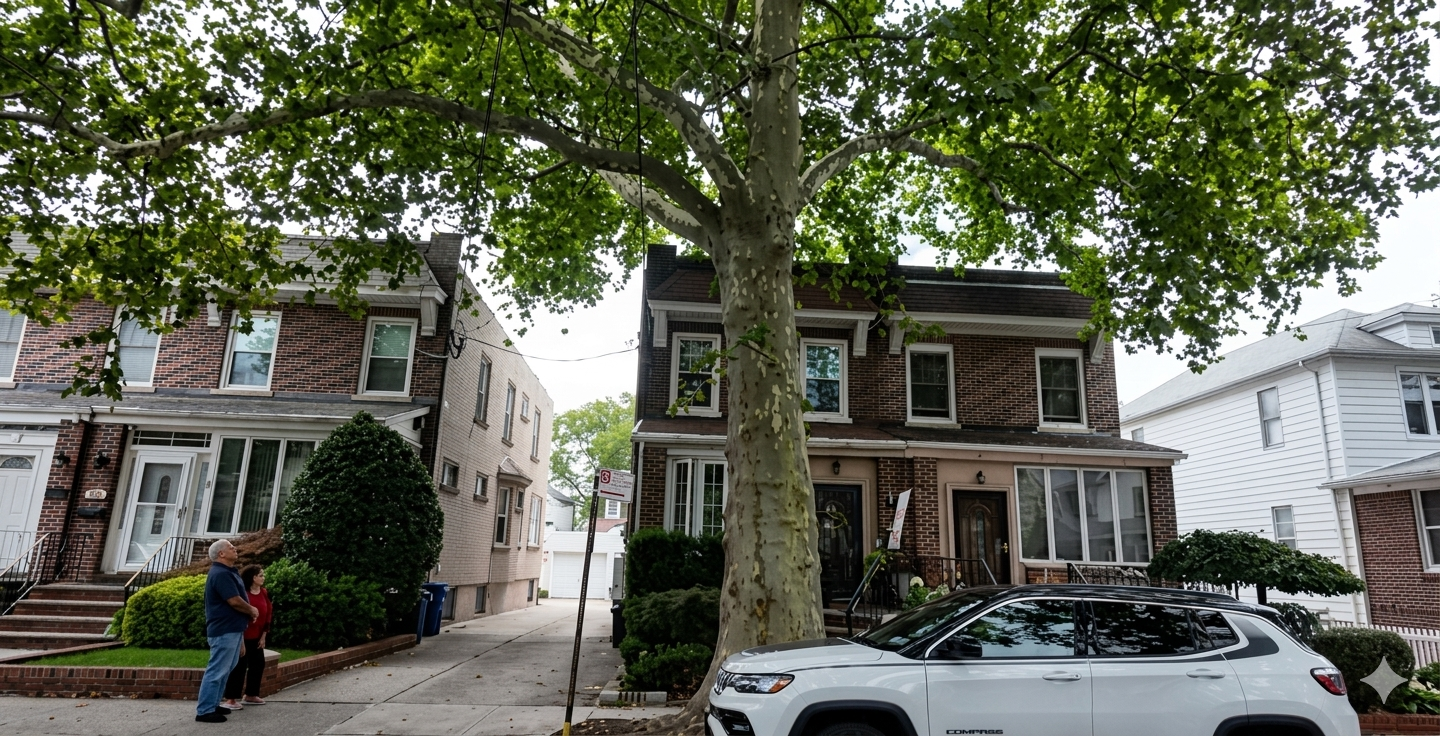
What if the tree in your backyard has been sick for two years, and you’re only now starting to notice? It’s a more common scenario than most Bronx homeowners realize. On day one, a tree disease is seldom accompanied by a clear and distinct symptom. Rather, it creeps quietly and slowly through the trunk, roots, or canopy, and is often overlooked as minor discoloration or a few additional dead twigs, until the damage is severe enough to render the tree structurally unstable. When a tree is a known safety hazard, it may have already reached the point where it is too far gone to be salvaged, hence the importance of knowing how to identify the warning signs early on in a tree’s life.
Why Early Detection Matters So Much
A tree doesn’t go from healthy to hazardous overnight. Disease development is usually slow over months or years causing a decline in the wood, interference with the movement of nutrients, or hollowing of the trunk from within. Early detection allows for treatment options whether by pruning infected limbs or treating fungal infections and improving soil conditions that are not available when the disease is advanced. If left unaddressed, a diseased tree will eventually become a structural hazard by falling limbs or, in the worst cases, complete tree collapse near a residence, driveway or sidewalk. That risk is exacerbated in a borough like the Bronx, where trees are often very near structures and pedestrian traffic.
Discoloration and Abnormal Leaf Patterns
A first symptom that may be observed is colour changes in foliage, which do not correspond with the season. If leaves turn yellow in the middle of summer and then begin to brown across the canopy or if leaves begin to spot, curl or drop early, it can be a sign of something else. The leaf spot diseases are produced by a number of fungal and bacterial pathogens and tend to begin as small discoloured spots which may develop to cover the entire leaf and then the whole canopy.
Because these symptoms can look similar to ordinary seasonal stress or minor nutrient deficiency, it’s worth paying attention to patterns is the discoloration concentrated on one side of the tree, spreading over time, or appearing alongside other symptoms like thinning growth? That combination is a stronger indicator of genuine disease than an isolated batch of yellow leaves.
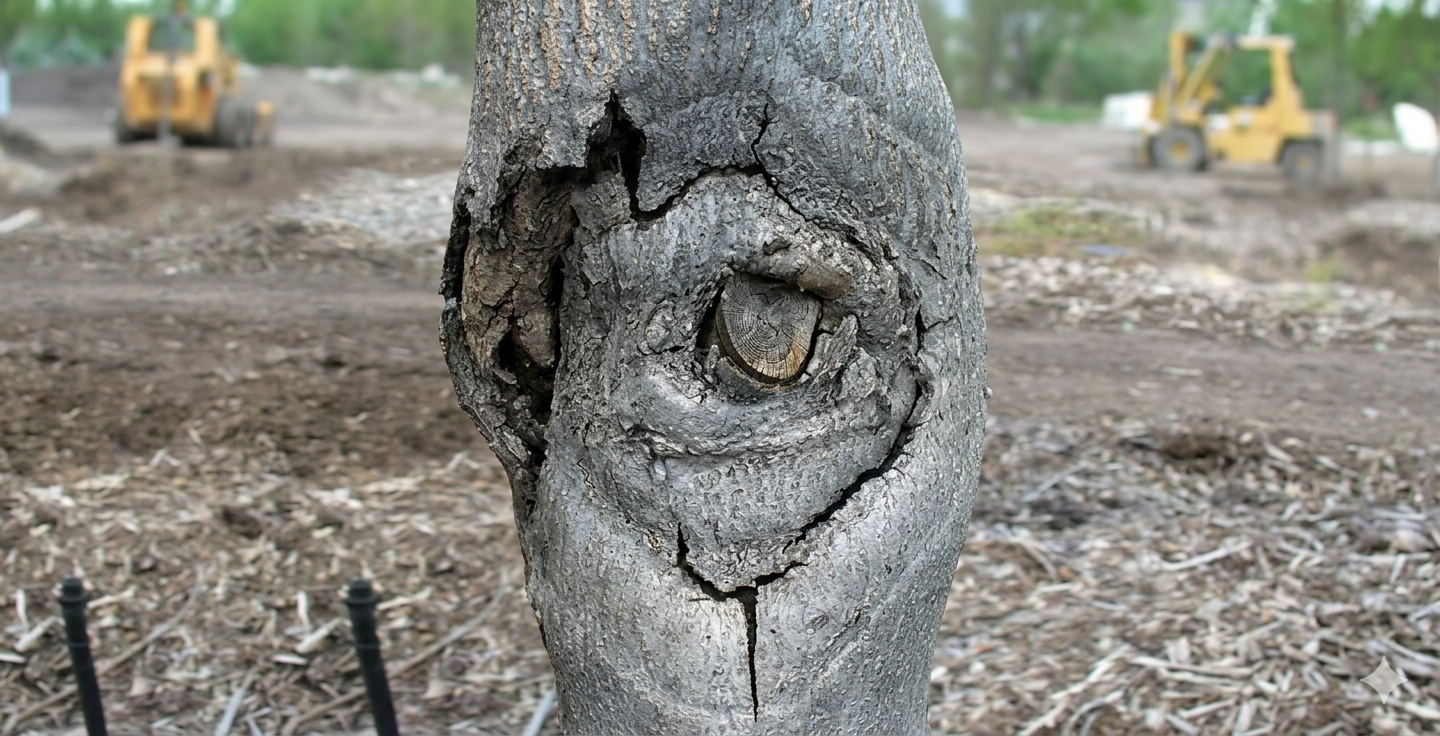
Cankers and Bark Abnormalities
A first symptom that may be observed is colour changes in foliage, which do not correspond with the season. If leaves turn yellow in the middle of summer and then begin to brown across the canopy or if leaves begin to spot, curl or drop early, it can be a sign of something else. The leaf spot diseases are produced by a number of fungal and bacterial pathogens and tend to begin as small discoloured spots which may develop to cover the entire leaf and then the whole canopy.
Because these symptoms can look similar to ordinary seasonal stress or minor nutrient deficiency, it’s worth paying attention to patterns is the discoloration concentrated on one side of the tree, spreading over time, or appearing alongside other symptoms like thinning growth? That combination is a stronger indicator of genuine disease than an isolated batch of yellow leaves.
Unusual Growths: Galls, Conks, and Fungal Fruiting Bodies
If there are growth areas that are abnormal on the bark, branch or at the base of the trunk, it is something to take seriously. Swelling, tumor-like growth (galls) of insects, bacteria, or fungi may be a sign of an active infection that is interfering with normal tissue growth.
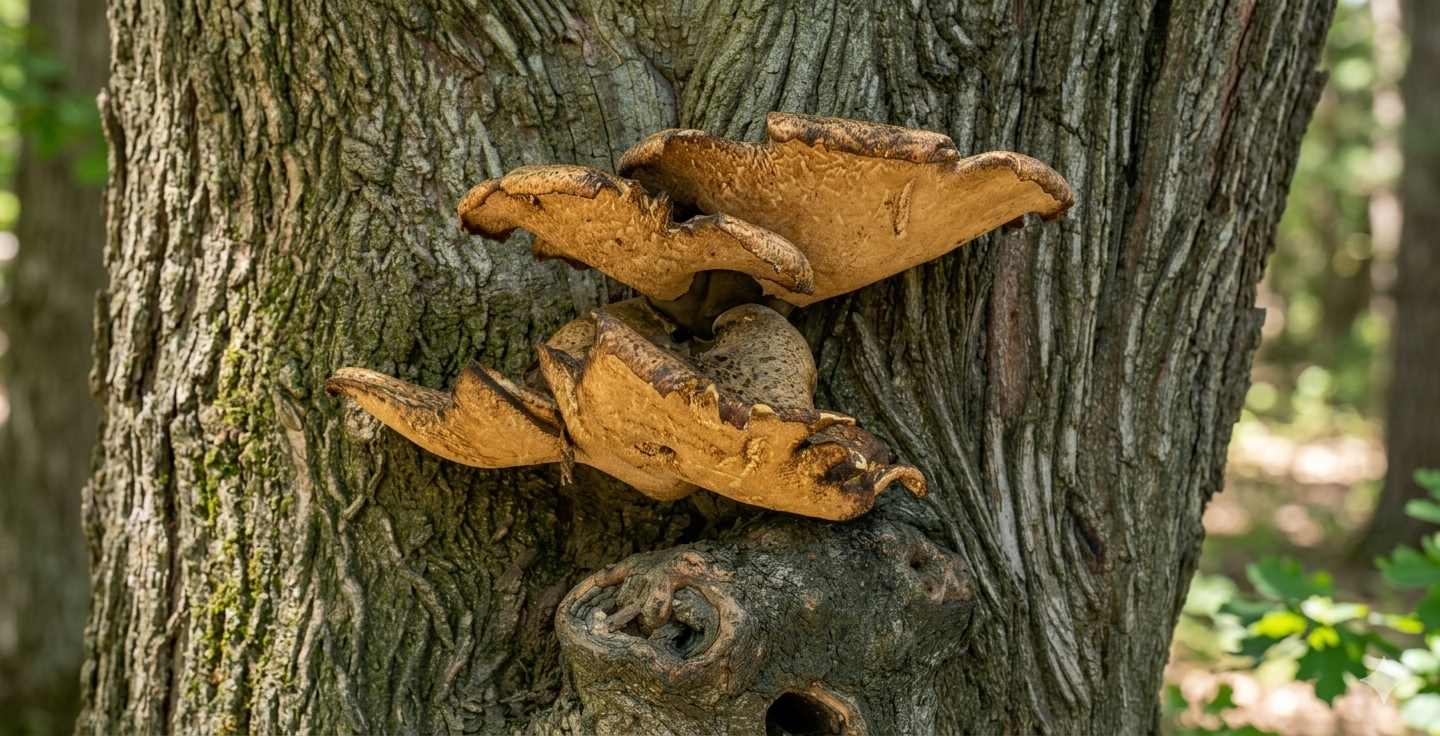
More alarming are the shelf-like or mushroom-like fruiting bodies of wood-decay fungi, known as conks, which is where the fungus usually grows at the base of the trunk or on major roots.
Conks are an outward manifestation of an underlying condition of internal decay, which may have been caused by the action of various pathogens such as Ganoderma or Armillaria that have been acting on the tree for a considerable time prior to conk production. When these fungal structures can be seen, a large amount of internal decay is typically evident and a significant portion of the structural wood is lost.
Dieback in the Crown
Progressive death of branches from the outside to the inside (crown dieback) is a classic sign of a systemic disease or failure of the root system. Dieback manifests as bare, brittle branch tips that remain on the tree through the growing season, with the rest of the tree seemingly leafing out normally, unlike natural, gradual leaf drop of a healthy dormant tree.
This is usually a sign of vascular disease, in which a pathogen slows the flow of water and nutrients in the tree’s system, and the furthest branches are the first to suffer. Examples of this type of progressive crown dieback in affected trees are well documented diseases, such as Dutch elm disease or oak wilt.
Other Physical Warning Signs to Watch For
Beyond discoloration, cankers, and fungal growth, several additional symptoms often show up alongside disease progression. Catching these earlier rather than later can make the difference between treatment and removal.
Bark and Trunk Symptoms
- Bark splitting cracked or splitting bark without an obvious external injury, often caused by internal pressure from advancing decay
- Sap oozing unusual seepage from the trunk, sometimes with a fermented or sour smell, which can indicate bacterial wetwood
- Wood-boring insect activity small entry holes, sawdust-like frass, or tunneling patterns visible on the bark surface
Signs of Pest Involvement
- Increased woodpecker activity birds feeding heavily on insects within the trunk, since stressed and decaying wood is far more attractive to pests than healthy tissue
- Visible beetle activity boring beetles and similar pests are often drawn to trees already weakened by disease
Root Zone Red Flags
- Root rot often linked to waterlogged or poorly draining soil around the base
- Girdling roots roots that wrap around and compress the trunk’s base, restricting circulation
- Mushroom rings fungal growth forming in a circle around the trunk, often signaling root-level fungal infection
- Soil heaving visible lifting or cracking of soil near the base, which can indicate root failure in progress
- Disproportionate thinning a canopy that looks unusually sparse relative to the trunk’s size, even when no other above-ground symptoms are obvious
Why Bronx Trees Face Added Risk
Trees in the Bronx are at a greater risk of disease than trees in less developed areas, due to the urban environmental stress. Compacted soil, winter treatment with road salt, lack of space for roots under sidewalks and pavement, and air pollution all stress a tree’s natural resistance and help opportunistic pathogens to establish themselves. An already stressed tree will have less resources available to defend against the infection, so disease will move in more quickly and with more severity than in a less stressed tree. This is one of the reasons that frequent monitoring is even more important in a built-up urban area than perhaps in a more rural area where trees are under fewer stressors.
When to Call a Professional
If you’re noticing any combination of these symptoms, it’s worth getting a professional evaluation before the tree’s condition progresses further:
Get an Inspection If You Notice:
- Discoloration or dieback spreading across the canopy
- Cankers on the main trunk, especially ones that appear to be expanding
- Conks, mushrooms, or other fungal growth at the base
- Bark splitting, sap oozing, or signs of wood-boring insects
- Soil heaving, mushroom rings, or thinning canopy relative to trunk size
A certified arborist will be able to determine the specific pathogen or condition, the extent of the damage to the tree, and what measures should be taken to preserve the tree: treatment, selective pruning or removal. However, a self diagnosis of a tree using general symptoms only may overlook information that is critical to the determination of whether or not the tree can be saved or is an unacceptable hazard.
Conclusion
When a tree becomes a safety hazard it’s seldom an overnight development and often a symptom that had been ignored or untreated for months or years. Knowing the signs and symptoms of discoloration, cankers, abnormal growth, crown dieback and root zone change provides the Bronx homeowner a genuine chance to take early action to save the tree or at least salvage it. But with the added stress compacted soil, road salt, and limited root space put on urban trees by their close proximity to homes, driveways, and sidewalks, it’s not an optional service it’s an element of good stewardship.
When you see some of these warning signs in a tree on your property, don’t be tempted to wait until the situation deteriorates. Owens Tree Service Bronx can give you a comprehensive and professional evaluation and honest advice as to where to go from there, treatment or removal.