
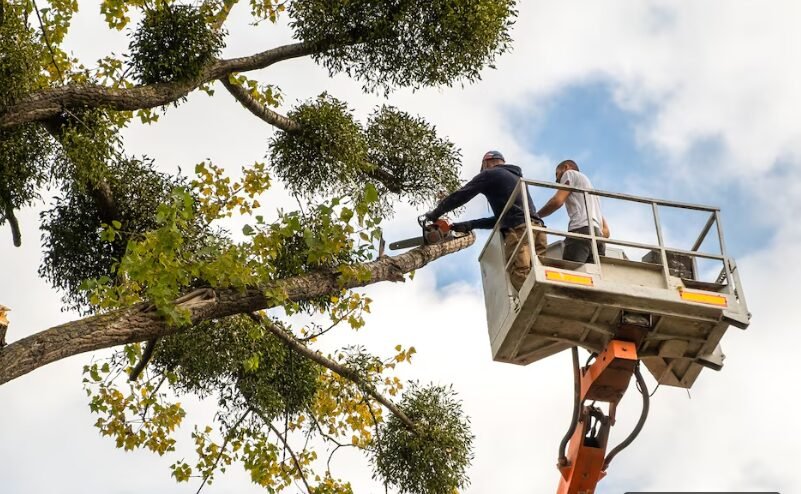
Have you ever wondered how massive, gigantic trees get taken down by professionals? How do they cut these trees without causing any harm to their surroundings? Tree cutting might seem straightforward from a distance. But in reality, it is one of the most dangerous outdoor jobs. It demands expert training and specialized tools to make your outdoor spaces look as good as before. In this article, we are pulling back the curtain to show you the top safety practices and cutting-edge equipment used by certified professionals to tackle tree cutting challenges in the right way.
Why Tree Cutting Safety Matters
Tree cutting involves heavy equipment and elevated work. It has some unpredictable natural elements due to which one must ensure strict adherence to established protocols. Without complying with safety measures, accidents and property damage can occur. One could also lose their life. According to the U.S. Bureau of Labor Statistics, tree work is one of the hazardous jobs. That is why every professional crew is trained to handle tree cutting jobs carefully with confidence.
1. Pre-Job Site Assessment: Plan The Cut
Before any chainsaw roars to life, a thorough site assessment is a must. It helps to carry out a safe operation to revitalize your outdoor sanctuaries.
- Tree Health Inspection: Crews check for dead limbs. They look for cracks in the trunk and any fungal growth that may compromise the tree’s structural integrity.
- Drop Zone Identification: They establish a clear fall path, thereby ensuring the tree won’t crash into structures or utility lines.
- Environmental Hazards Check: This includes spotting underground utilities and uneven terrain. Basically checking anything that could affect the cutting strategy.
- Weather Monitoring: Wind gusts and rain can quickly ruin your trees. So, always keep the weather in check.
2. Protective Equipment:
Tree cutting should not be performed without PPE (Personal Protective Equipment). Safety is paramount while using sharp tools. Therefore, everyone in the crew wears it. It gives protection from potential hazards such as fallen debris etc.
- Protective Chaps/Pants: Constructed from ballistic materials like Kevlar. These stop a running chainsaw instantly if contact occurs.
- Hard Hats with Chin Straps: They protect from falling limbs. These hats also come with visors or earmuffs.
- Cut-Resistant Gloves: Improves the grip to hold onto tools while cutting. Also, shield hands from abrasions or saw injuries
- Shoes with Non-Slip Soles: Designed for absorbing impact using steel.
- High Visibility Clothes: Enhance awareness of all crew members.
- Goggles/Face Shield for protection.
3. Rope & Rigging Systems
Removing large limbs or entire trees? Brute force isn’t the answer. The only way out are rigging systems that allow for controlled dismantling, piece by piece.
- Ropes: Arborists use double-rope or single-rope systems. Help arborists ascend and work safely.
- Friction Devices and Pulleys: These allow for the smooth lowering of heavy limbs to the ground.
- Slings & Blocks: Distribute weight evenly, and they reduce shock loads on anchor points.
- Tree Anchors: Positioned for balance and control. This support ensures climbers can work without swaying or slipping.
4. Advanced Tree Cutting Tools
Cutting crews do not rely on a chainsaw and ladder. They utilize state-of-the-art tools to carry out tree cutting safely.
- Chainsaws: Lightweight, compact. They are perfect for aerial cutting to cut tree canopies.
- Pole Saws & Pruners: Extend reach from the ground to remove even a small limb. No need for a ladder.
- Hydraulic Tree Shears: Used on large equipment like skid steers. They cut through trunks in seconds and keep your workers at a safe distance.
- Wood Chippers: Keep your areas safe and clean by shredding branches into mulch.
- Stump Grinders: While not directly related to cutting, stump removal is often the final stage.
5. Climbing Techniques
Aerial safety is non-negotiable. Arborists navigate high branches without risking a fall.
- 3-Point Contact Rule: Always maintain three points of contact when climbing. The formula: two hands, one foot, or two feet, one hand.
- Ropes with Shock Absorption: Prevent injury in case of sudden drops.
- Anchor Point Testing: Before climbing, teal. Tie-in points and stress test to bear weight and remain secure under shifting loads.
- Tool Belts: Tools are clipped in or tethered to avoid dropping.
6. Traffic and Pedestrian Control
Tree cutting takes place near roads and sidewalks.
- Barricades and Warning Signs: Create a buffer zone between worksite and public.
- Flaggers: Crew members manage vehicle traffic and foot movement during tree work.
- Communication Radios: Used to alert team members of approaching pedestrians or emergencies.
7. Emergency Preparation
Tree cutting jobs can go sideways. Why so? Due to nature’s unpredictability. For worst-case scenarios:
- First Aid Kits: Stocked with wound dressings, burn treatments and more.
- CPR and First Aid Training
- Emergency Descent Devices: Allow climbers to evacuate trees rapidly if accidents occur.
- Contact with Authorities: In high-risk jobs, fire or EMS may be notified in advance.
8. Team Communication
No tree cutting job is successful without clear communication between every team member.
- Pre-Job Briefings: Assign roles and discuss the day’s plan.
- Hand Signals and Radios: Allow coordination.
- Stop Work: Any team member can halt operations if something seems unsafe.
9. Weather-Related Precautions
Weather is one of the biggest variables in tree cutting. Even light wind can make a stable tree dangerous.
- Wind Speed Monitoring: Pause if winds exceed 15–20 mph.
- Lightning: No cutting is done if thunder is heard (within a 10-mile radius).
- Heat & Cold Protection: Hydration and shade breaks are important as they help keep workers stay functional and alert.
10. Post-Job Cleanup
Once the cutting is done, the work isn’t over. The crew checks for:
- Debris Removal: All branches, wood chips, and trunks are cleared. They can also be repurposed as mulch.
- Tool Checks: Equipment is inspected for wear or any damage.
- Site Walkthroughs: For anything that could cause future hazards.
Conclusion
Tree cutting is far more than simply chopping wood. It is a technical and high-risk task. Certified professionals carry out with great precision and care. With a commitment to safety, they are passionate about transforming your outdoor sanctuaries full of healthy and thriving greens. Looking for a professional tree cutter to remove any unwanted trees? Hire our arborists at Owens Tree Service Bronx. We cater to your needs by providing reliable and exceptional services. Be it an Oak tree or a mulberry, we have the expertise to handle it all.